
Millets through the ages
From Neolithic fields to the Vedic fire, from Kautilya’s storehouse to the Andes — and to your plate today. Every line here comes from a text you can open: the page, the reference, and the dish you can cook from it.
In the fields of India, and far away
- Browntop millet. Neolithic south India (2800-1200 cal BC): likely staples included two millet-grasses indigenous to the peninsula, Brachiaria ramosa (browntop) and Setaria verticillata. (Fuller D, Korisettar R, Venkatasubbaiah PC, Jones MK)
- Little millet. Archaeobotanists find little millet as a crop at Harappa as early as its Ravi phase, and as a staple of protohistoric Gujarat. (Weber & Fuller, 'Millets and their role in early agriculture')
- Kodo millet. Kodo millet originated in India; it was domesticated here some 3,000 years ago. (FAO — International Year of Millets 2023 · de Wet et al. 1983, Economic Botany)
- Barnyard millet. Indian barnyard millet (Echinochloa colona) was domesticated in India; Japanese barnyard millet in Japan, some 4,000 years ago. (de Wet et al. 1983, Economic Botany)
- Jowar. The earliest domesticated sorghum finds known are from India, e.g. Rojdi (Gujarat), and from Kawa in the Nubian Nile valley (first millennium BC). (Weber SA & Fuller DQ, 'Millets and their role in early agriculture')
- Bajra. No West African pearl millet find is older than 1700 BC, by which time domesticated pearl millet had reached India. (Weber SA & Fuller DQ, 'Millets and their role in early agriculture')
- Quinoa. Quinoa comes from the Andes of Bolivia and Peru, where it has been grown for about 7,000 years; the shores of Lake Titicaca hold its greatest diversity. (FAO / PROINPA 2011, Quinoa: an ancient crop)
The Vedas: millet in the fire offerings
Two millets run through the Vedic rites: priyangu (foxtail millet) and shyamaka (barnyard millet).
Foxtail millet is named in 8 rites:
Barnyard millet is named in 8 rites:
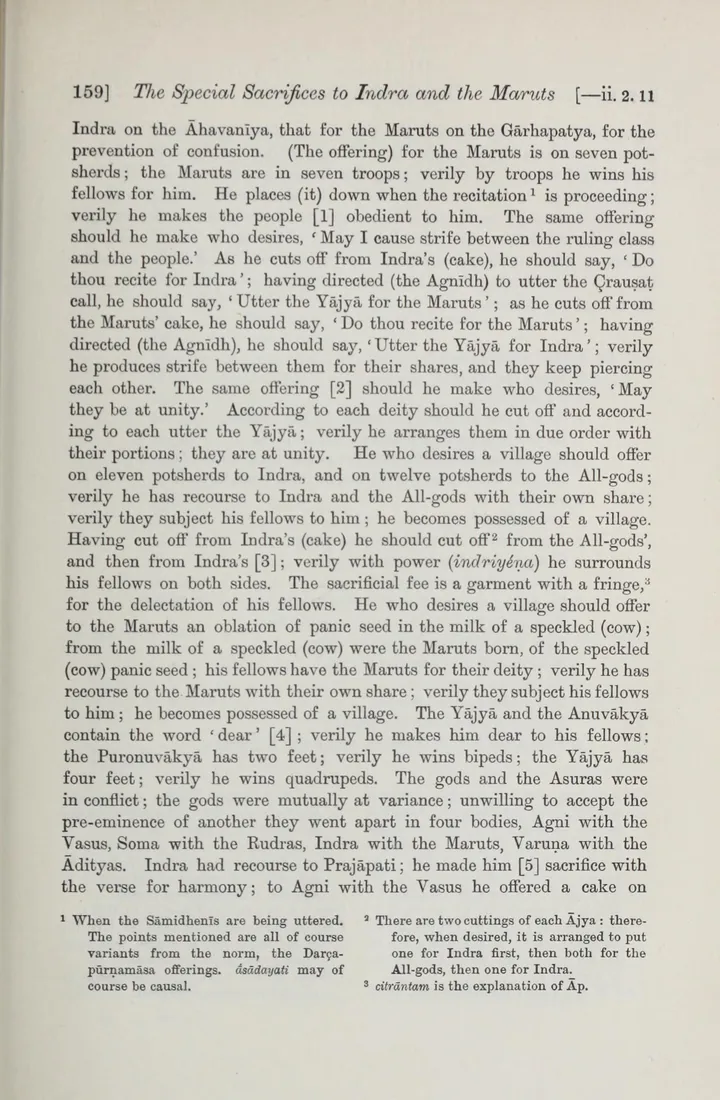
offer to the Maruts an oblation of panic seed in the milk of a speckled (cow)
The Taittiriya Samhita of the Black Yajurveda (II.2.11.4) describes foxtail millet (priyangu) cooked in milk, as an offering: A. B. Keith, The Veda of the Black Yajus School (Taittiriya Sanhita), Harvard Oriental Series 18 (1914), p. 159; priyangu = foxtail millet (Panicum italicum) in Macdonell & Keith's Vedic Index (1912)
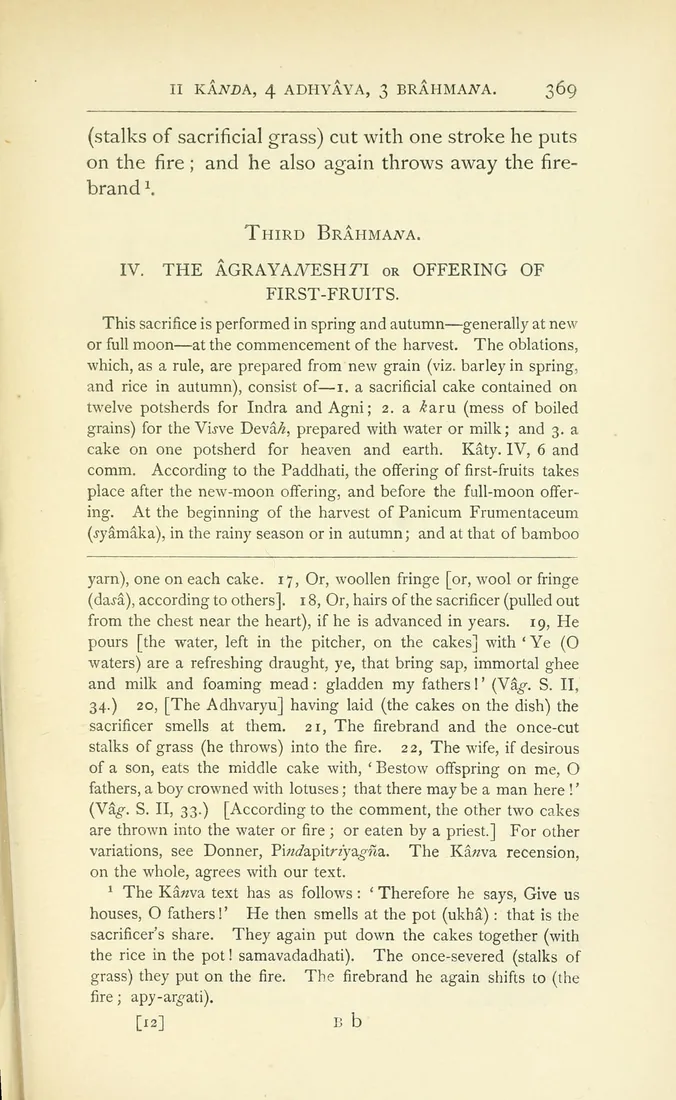
For Soma Vanaspati (the wood-lord or tree) he then prepares a pap of syâmâka millet
Shatapatha Brahmana (Madhyandina recension), Shatapatha Brahmana V, 3, 3, 4 (Rajasuya: the offerings to the "Divine Quickeners") — translated by Julius Eggeling
Kautilya’s Arthashastra: the storehouse knows its millets
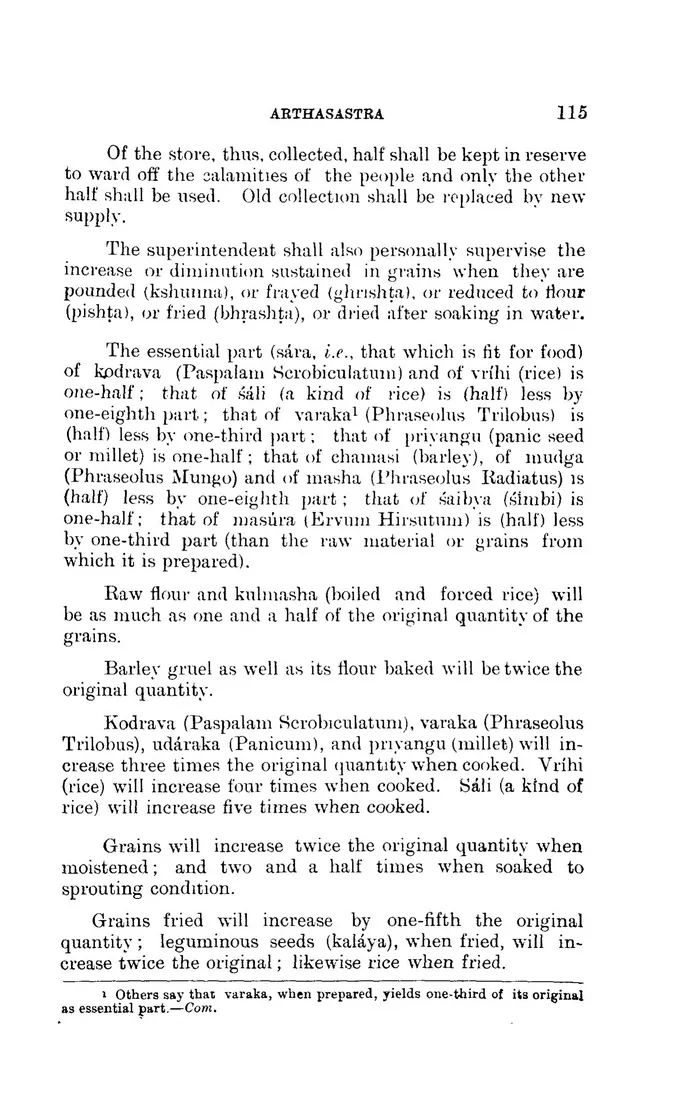
Kodrava (Paspalam Scrobiculatum), varaka (Phraseolus Trilobus), udáraka (Panicum), and priyangu (millet) will increase three times the original quantity when cooked.
Arthashastra Book II, chapter 15 ("The Superintendent of Store-house"), translated by R. Shamasastry
Pliny, in Rome, on millet and panic
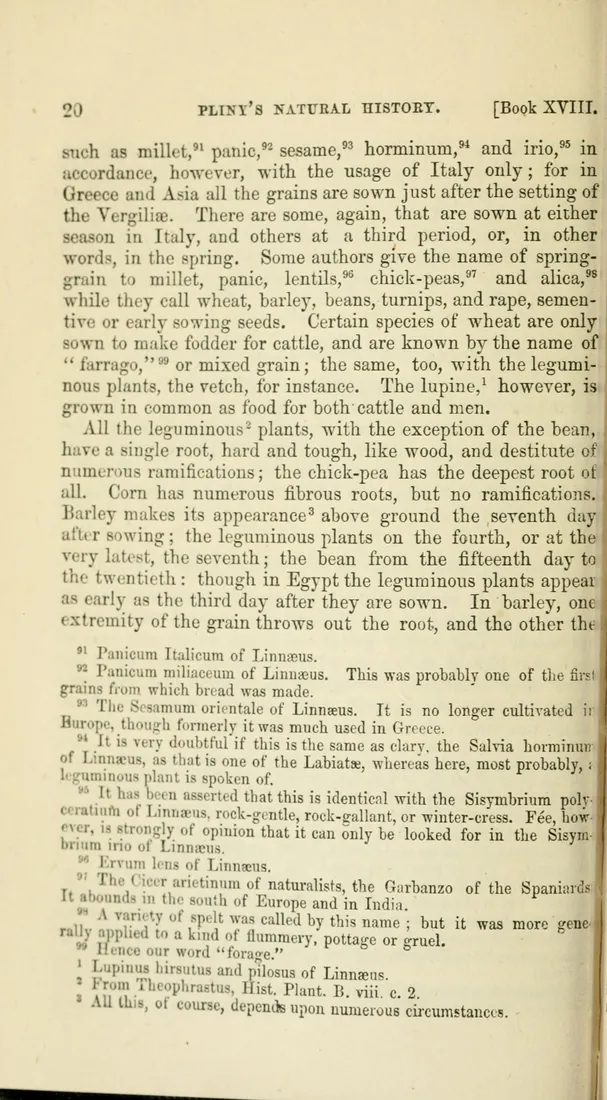
Page 20: Pliny on spring-sown grains 'such as millet, panic, sesame ...', with footnotes '91 Panicum Italicum of Linnaeus. 92 Panicum miliaceum of Linnaeus. This was probably one of the first grains from which bread was made.'
The Sangam poems: foxtail millet for the guest
பசுந்தினை மூரல் பாலொடும் பெறுகுவிர்Perumpāṇāṟṟuppaṭai (one of the Pattuppāṭṭu, the Ten Idylls of Sangam Tamil), Perumpāṇāṟṟuppaṭai lines 147-168 ("Residences of Cattle Herders"), lines 167-168 — read the English translation
Cook pasunthinai mural →Srinatha in Palnadu: jonna and sajja every day
Even the most handsome person Kama, the god of love, will be served with Sorghum meal.
Chatupadya Manimanjari, verse 323; English: Ranjan Babu (2000), PDF p. 16 (printed p. 8), and the line translation in note 20, PDF p. 144 (printed p. 136)
Cook jonna kudu →Cook sajja kudu →The Kṣemakutūhala: a king’s payasam of barnyard millet
The Kṣemakutūhala, a Sanskrit cookery book of 1548, describes Rājapāyasa (12th chapter, verse 3): new husked barnyard millet (śyāmāka), one part to eight parts of milk boiled without water, finished with ghee and sugar. The verse begins:
निर्नीरपाचितपयः प्रहिताष्टभागं श्यामाकतन्दुलनवंKṣemakutūhalam, Sanskrit verse (ed. Gyanendra Pandey, Chaukhamba, p. 231); FSSAI's Ayurveda Aahara compendium index (2024), entry 46.8
Cook the payasam →Cieza de León in the Andes: quinoa, cooked like rice
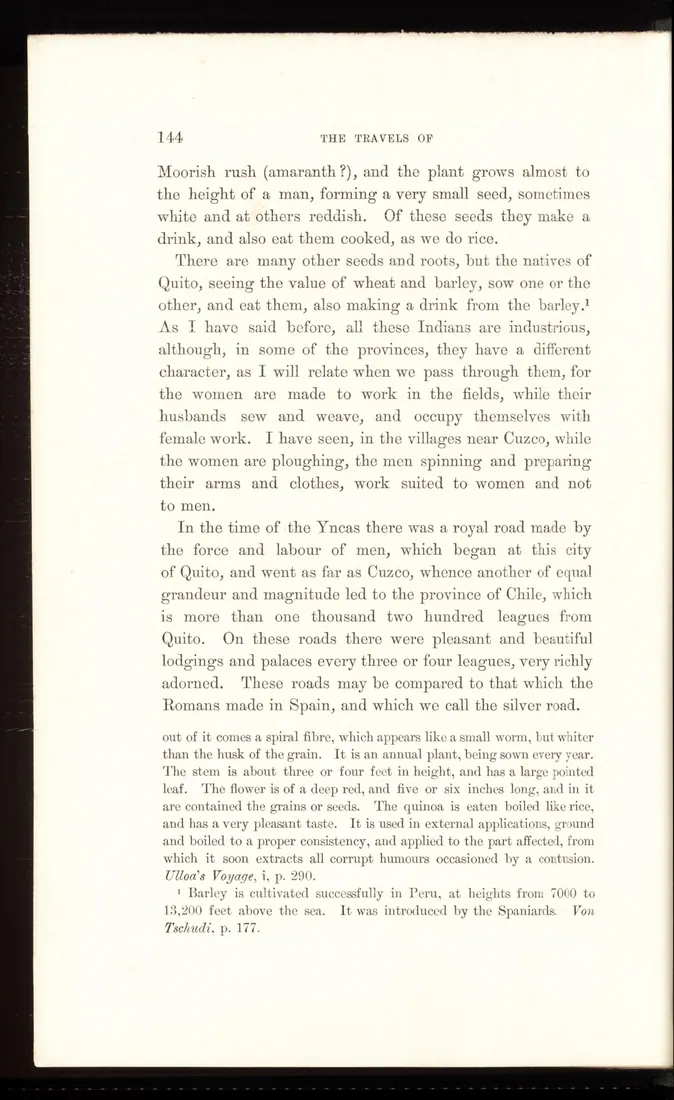
Of these seeds they make a drink, and also eat them cooked, as we do rice.
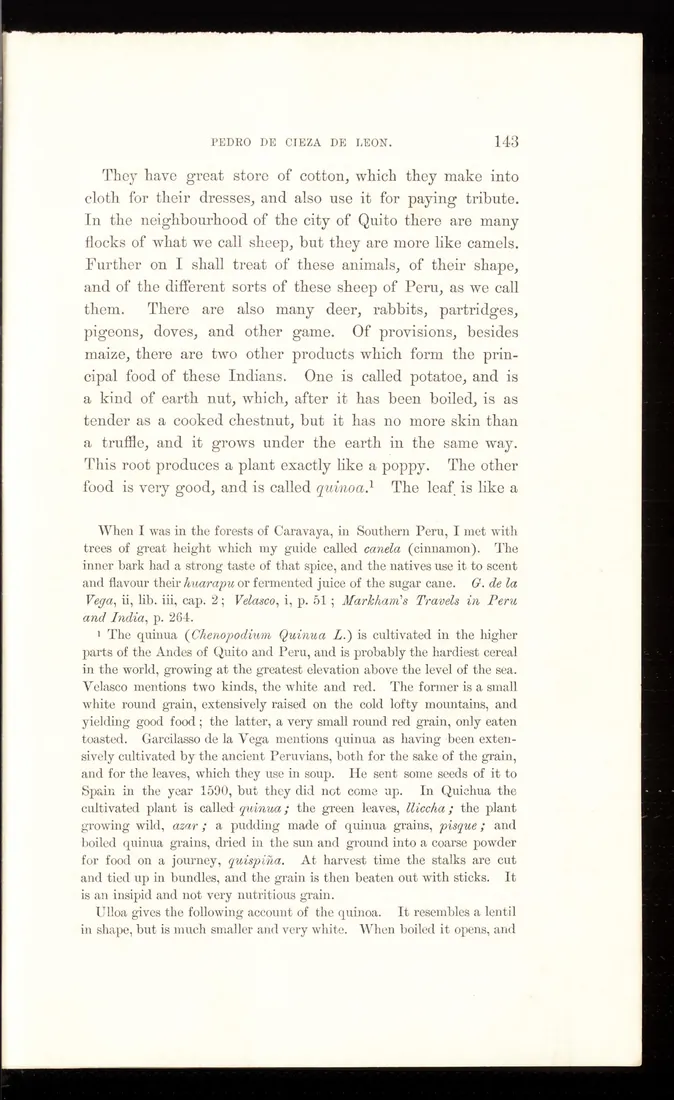
Parte primera de la Crónica del Perú (The First Part of the Chronicle of Peru), ch. XL, Chapter XL ('Of the situation of the city of San Francisco del Quito...'), p. 144 of the 1864 translation
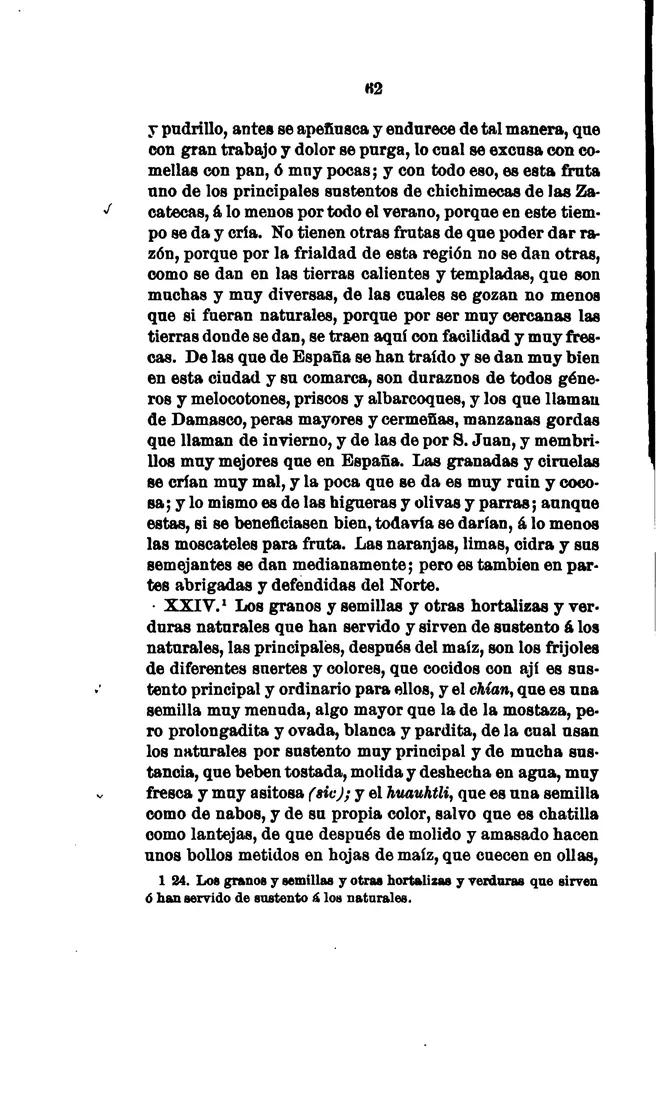
Tezcoco, Mexico: amaranth, ground and shaped
Page 62, in Spanish: ch. XXIV on the grains of the natives — 'el huauhtli, que es una semilla como de nabos ... de que despues de molido y amasado hacen unos bollos metidos en hojas de maiz, que cuecen en ollas'.
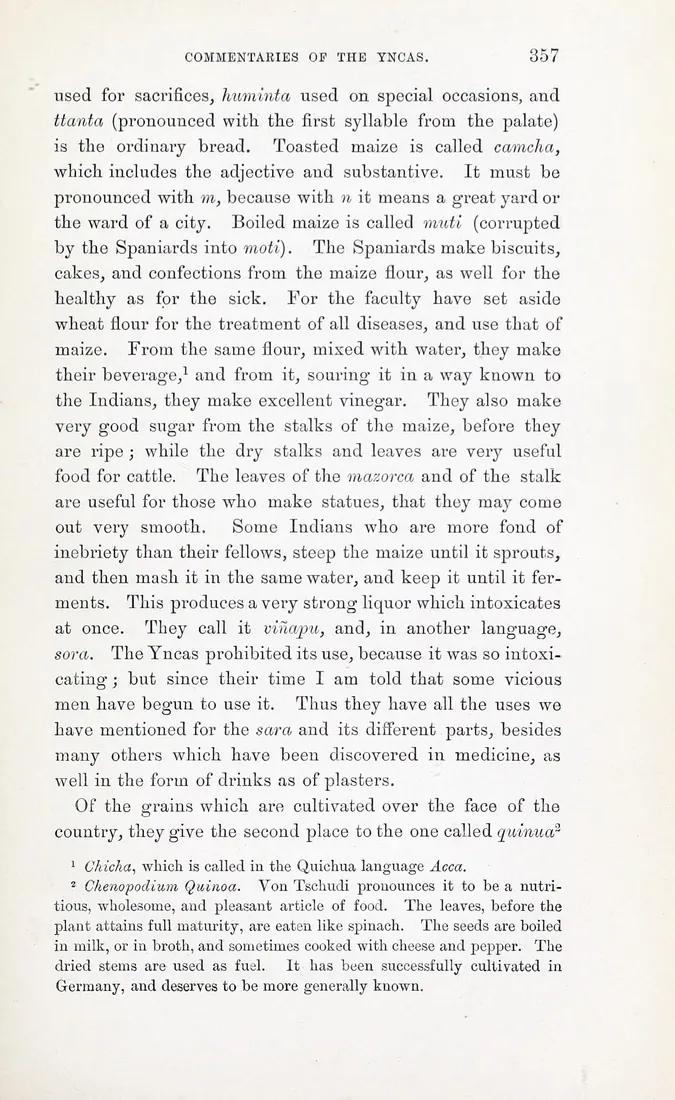
Garcilaso de la Vega: quinoa, second only to maize
Page 357: 'Of the grains which are cultivated over the face of the country, they give the second place to the one called quinua', with Markham's footnote 'Chenopodium Quinoa ... The seeds are boiled in milk, or in broth'.
Emperor Jahangir in Gujarat: bajra khichri
Emperor Jahangir, writing about the foods of Gujarat in his memoirs (early 1600s):
there is the khichri of bajra (a mixture of split peas and millet boiled together); this they also call laziza
Tuzuk-i-Jahangiri, vol. 1, translated by Alexander Rogers, edited by Henry Beveridge (1909)
Cook bajra khichdi →Washington: a leaflet of buckwheat recipes
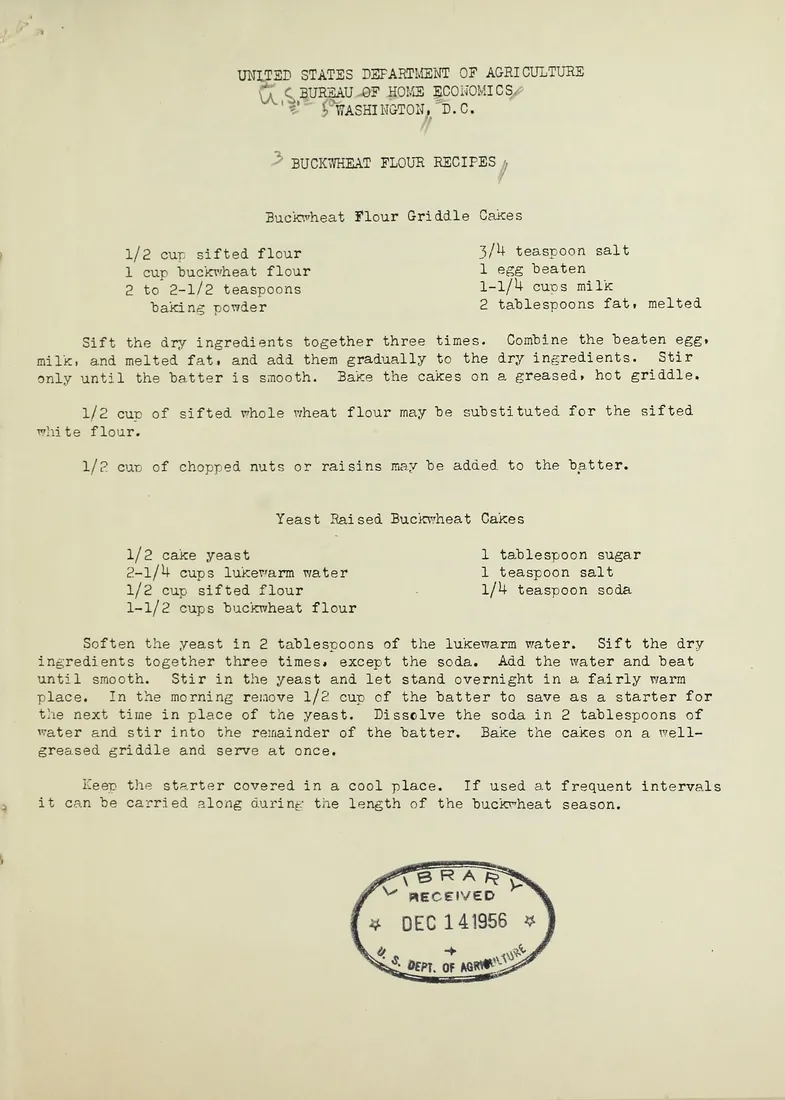
'Buckwheat Flour Recipes' — griddle cakes and yeast-raised buckwheat cakes, with a USDA Library 'RECEIVED DEC 14 1956' stamp.
Ishva begins, in Hyderabad
Ishva Consumer Products Pvt Ltd starts packing in Hyderabad.
The world’s Year of Millets
The United Nations declared 2023 the International Year of Millets (General Assembly resolution 75/263, 3 March 2021), on India's proposal. (UN document)